
Ice Damming: What Causes It and What Does Not
As winter progresses and temperatures fluctuate, many homeowners begin noticing ice build-ups along roof edges and inside eavestroughs. This phenomenon is known as ice damming, and it is important for homeowners to clearly understand what causes it and what does not.
At Weaver Exterior Remodeling, we believe education is key. When customers call in with concerns about icicles or ice in their eavestroughs, our goal is to confidently provide accurate information right away without creating unnecessary concern or confusion.
1. What Causes Ice Damming?
Ice damming is not an eavestrough issue.
It is caused by heat loss from the home into the attic space.
When an attic is poorly insulated or inadequately ventilated, warm air rises and escapes through the roof. This heat melts snow on the roof surface. The melted water then flows down toward the colder roof edge and eavestrough, where it refreezes. Over time, this repeated freeze and thaw cycle creates ice build-ups and icicles.
This winter, ice damming has been more noticeable on many homes due to frequent temperature fluctuations above freezing during the day and below freezing at night, which are ideal conditions for ice dams to form.
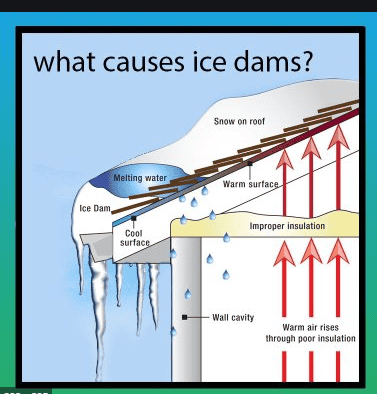
2. Do Eavestroughs or Leaf Guards Cause Ice Damming?
No.
Eavestroughs, whether installed with or without Alu-Rex leaf guards, do not cause ice damming.
Ice damming begins before water ever reaches the eavestrough. By the time ice appears in or along the gutter, the issue has already occurred at the roof and attic level.
There is extensive information available from building science professionals confirming that ice damming is an insulation and or ventilation issue, not a gutter issue. Eavestroughs only come into play after melted water reaches the roof edge.
3. Why Ice Damming Is More Common This Time of Year
Weather plays a major role. During periods of fluctuating winter temperatures:
- Snow melts on warmer days
- Water flows toward the roof edge
- Temperatures drop in the evening, freezing that water
- Ice accumulates layer by layer
These conditions are temporary and seasonal, and in most cases, the severity of ice damming will pass as weather patterns stabilize.

4. How Homeowners Can Help Manage Ice Damming
While the root cause must be addressed at the attic level, there are ways to help manage the issue.
Long-Term Solutions
- Topping up attic insulation to reduce heat loss
- Improving attic ventilation to promote consistent roof temperatures
These are the most effective ways to prevent recurring ice damming.
Short-Term or Supplemental Options
- Installing roof heat cables along roof edges to help manage ice build-up
- Using a roof shovel to carefully remove the bottom one to two feet of snow along roof edges, allowing sunlight to melt ice more efficiently
Heat cables can help manage symptoms, but they do not replace proper insulation and ventilation.
Moving Forward
Ice damming is a weather-related condition that many homes experience during winter and it does not indicate a failure of your eavestrough system. Your Weaver eavestroughs are designed to perform once water reaches the gutter, and seeing ice nearby does not mean the system is not working as intended.
As temperatures continue to fluctuate, these conditions should gradually improve. In the meantime, understanding how and why ice damming occurs can help set the right expectations during the winter season.
Rest assured that your eavestrough system is functioning as designed and will resume normal performance as winter conditions stabilize.